Why Landscape Art Helps You Sleep Better (And Which Scenes Work Best for Bedrooms)

It's 2 a.m., and you're lying in bed, staring at the ceiling, mentally replaying that awkward thing you said in a meeting three weeks ago. Or maybe you're scrolling through your phone for the fifteenth time, telling yourself "just five more minutes" before you actually try to sleep.
Sound familiar?
If you've ever struggled to quiet your mind at night, you're not alone. According to the CDC, about one in three American adults don't get enough sleep, and chronic sleep problems affect millions worldwide. We try everything: blackout curtains, white noise machines, meditation apps, magnesium supplements, and that one breathing technique someone swore by on Instagram.
But here's something you might not have considered: the art on your bedroom walls could actually be affecting how well you sleep.
Over the past few years, I've kept a few different Peter Lik pieces above my bed, nighttime shots with the Milky Way stretching across the frame, or quiet winter scenes like his "Mystic Valley" from Yosemite National Park (which is on my bucket list). I also have a Thomas Kinkade painting called "Silent Night" that I keep up in my bedroom year-round (yes, even in July) because it's a cozy cabin with Christmas lights, and it reminds me of peace and happiness. Great things to think about before bed.
I can't say these prints magically knock me out at 10 p.m. every night, but they do something subtle and valuable: they remind me of beautiful, peaceful places right before I close my eyes. And as it turns out, there's actual science behind why that matters.
What Sleep Researchers Know About Visual Cues and Rest
Your brain doesn't shut off the moment your head hits the pillow. It's still processing the environment around you, including what you see in those final moments before sleep.
Research on sleep environments consistently points to a few key factors that influence how quickly you fall asleep and how well you stay asleep: light levels, color temperature, visual complexity, and emotional associations.
A study published in the Journal of Sleep Research found that bedroom environments with calming visual cues (soft colors, natural imagery, low visual complexity) were associated with better subjective sleep quality and faster sleep onset compared to rooms with stimulating or chaotic visuals.
Another review in the journal Sleep Medicine Reviews examined how environmental factors, including visual stimuli, affect circadian rhythms and sleep quality. The takeaway: what you look at before bed can either support your body's natural wind-down process or work against it.
So if you're choosing art for your bedroom, you're not just decorating. You're curating a visual environment that either helps your nervous system relax or keeps it on alert.
The Role of Color in Sleep and Relaxation
Let's talk about color, because it matters more than you might think.
Color psychology isn't just marketing fluff. Research published in the journal Color Research & Application has shown that different colors trigger measurable physiological and psychological responses. Blues and greens, for example, are consistently associated with feelings of calm, tranquility, and relaxation. Reds, oranges, and bright yellows tend to increase arousal, energy, and alertness.
A study from the University of Sussex found that people who viewed blue and green hues before sleep reported feeling more relaxed and had lower heart rates compared to those exposed to warmer, more stimulating colors.
For bedrooms, this translates pretty directly: calming coastal prints with soft blues and greens, misty mountain scenes, or quiet dawn reflections are more likely to support sleep than high-contrast cityscapes or fiery sunset abstracts.
That doesn't mean warm tones are off-limits. Soft, muted golds and gentle earth tones (think early morning light or winter landscapes) can also create a soothing atmosphere. The key is avoiding anything too bright, too saturated, or too visually "loud."
Why Nature Scenes Work Especially Well
If you've read my earlier post on the science behind why landscape art makes you feel better, you already know that nature imagery has a unique ability to calm the nervous system.
But there's a specific reason why nature scenes work so well in bedrooms: they tap into something called "soft fascination."
Soft fascination is a concept from Attention Restoration Theory, which suggests that natural environments hold our attention gently without demanding intense focus. Research from the University of Michigan shows that this kind of gentle engagement allows the brain's "executive function" to rest and recover, which is exactly what you need before sleep.
Compare that to something visually complex or mentally stimulating (a busy abstract, a dramatic action scene, or even a detailed cityscape), and you can see why your brain might stay "on" longer than you'd like.
Large landscape photography depicting open vistas, calm water, soft light, or gentle natural patterns gives your mind something peaceful to land on without overstimulating it. It's like a visual lullaby.
The Best Types of Landscape Scenes for Bedrooms
Not all landscape art is created equal when it comes to sleep. Some scenes naturally lend themselves to relaxation, while others might be too energizing or dramatic for a bedroom setting.
Here's what tends to work best:
1. Coastal and Water Scenes
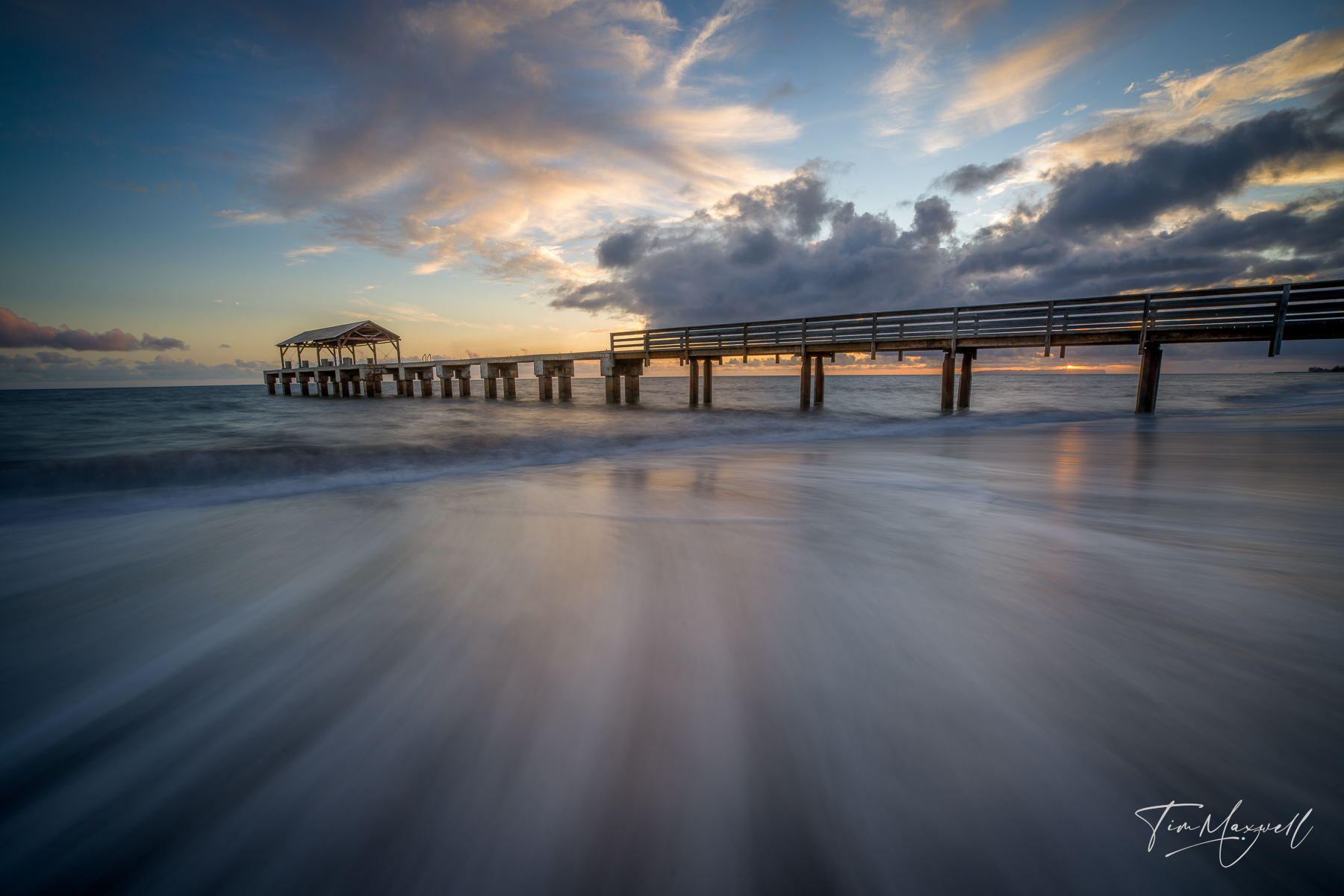
Soft waves, calm bays, misty shorelines. Water has an almost universal calming effect, and research on "blue spaces" (environments near water) shows that they reduce stress and promote mental restoration.
Prints like Sunrise at Makana, Framed by Tide, or Last Light at the Pier offer that gentle, rhythmic quality that mirrors the kind of mental state you're trying to reach before sleep.
2. Reflection Shots
There's something inherently peaceful about a still lake or a mountain reflected in calm water. These images convey balance, symmetry, and quietness, all of which support a restful mindset.
Reflection prints from the Colorado gallery or other calm water scenes work beautifully in bedrooms because they're visually soothing without being boring.

3. Soft Dawn or Dusk Light
Early morning or late evening light tends to be softer, warmer, and less intense than midday sun. These "golden hour" or "blue hour" scenes feel naturally restful because they mirror the times of day when our bodies are winding down or gently waking up.
Avoid anything too fiery or dramatic (a blazing red sunset might be stunning, but it's not exactly sleep-inducing). Instead, look for prints with gentle gradients, soft pastels, and calm skies.
4. Lighthouses and Quiet Landmarks
Lighthouses, in particular, carry symbolic weight: guidance, safety, calm. A lighthouse print from the Coastal gallery can add a sense of peaceful watchfulness to a bedroom, like a visual anchor that says "all is well."

5. Misty Mountains and Forests
Soft fog, gentle peaks, quiet forests. These scenes feel meditative and grounding. They're visually simple enough to avoid overstimulation but interesting enough to feel intentional and beautiful.
What to Avoid in Bedroom Art
Now for the part where I gently push back on some popular trends.
Not all art belongs in a bedroom, and some pieces that look great in a living room or hallway might actually work against your sleep.
High-Energy Abstracts
Bold, high-contrast abstracts with sharp lines and intense colors can be visually exciting, which is great for a workspace or entryway. But in a bedroom, they can keep your brain more alert than you'd like.
Busy, Complex Scenes
Cityscapes with lots of detail, crowded markets, or intricate patterns might be fascinating to look at, but they demand more mental processing. That's not what you want right before bed.
Overly Dramatic or Intense Imagery
A massive lightning storm, a crashing wave, a jagged mountain peak in harsh light—these images are powerful, but they're not calming. Save them for spaces where you want energy and impact, not rest.
Anything That Feels Stressful or Unresolved
This one's subjective, but if an image makes you feel tense, anxious, or unsettled, it doesn't belong in your bedroom. Trust your gut.
How to Choose the Right Print for Your Bedroom
Choosing bedroom art is more personal than choosing art for any other room. You're going to see it every night before you sleep and every morning when you wake up, so it needs to feel right on a deeper level than just "looks nice."
Here are a few questions to ask yourself:
- Does this image make me feel calm when I look at it?
- Are the colors soft and soothing, or do they feel energizing?
- Does this scene remind me of a place or feeling I want to carry into sleep?
- Is the composition simple enough to feel restful, or is there too much going on?
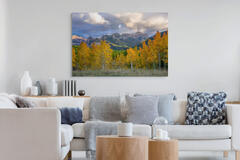
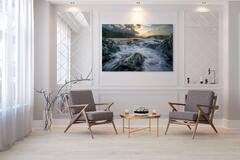
If you're struggling to picture how a print will actually look in your space, I'm always happy to create a room mockup for you. Sometimes seeing the piece on your wall (even digitally) makes all the difference.
And don't forget about size and placement. A large landscape print above the bed can create a sense of openness and calm, like a window to somewhere peaceful. Just make sure it's not so large that it feels overwhelming. For more on this, check out my post on how to decorate a modern home with landscape photography.
Why Print Quality Matters for Bedroom Art
You're going to be looking at this piece every single day, often in soft, low light. That means print quality and presentation really matter.
Lumachrome® TruLife® acrylic prints and ChromaLuxe® HD metal prints both offer incredible depth, clarity, and color accuracy. They don't fade, they don't yellow, and they maintain that sense of presence that makes a piece feel like a window rather than a poster.
For bedrooms, I especially love the way acrylic handles soft light. It has a luminous quality that feels almost three-dimensional, which works beautifully with dawn, dusk, and water scenes.
And if you want something truly special, a framed acrylic print with handcrafted Italian wood from ROMA Moulding adds warmth and elegance without feeling too formal.
Lighting also plays a role here. If you're not sure how to light your bedroom art properly, I wrote a detailed guide on properly lighting artwork that covers everything from picture lights to ambient lighting strategies.
Bringing It All Together
To sum up what the research and real-world experience suggest:
- Your bedroom environment, including the art on your walls, affects how well you sleep.
- Colors matter. Blues, greens, and soft earth tones support relaxation. Bright, saturated, or high-contrast colors can keep you alert.
- Nature scenes with "soft fascination" (calm water, gentle light, open vistas) help your brain wind down.
- Avoid overly complex, dramatic, or energizing imagery in the bedroom.
- Choose art that feels personally calming and meaningful to you.
If you've been thinking about adding art to your bedroom, or if you're ready to replace that random print you bought years ago and never really loved, start by asking yourself: "What do I want to feel when I close my eyes at night?"
From there, you might:
- Browse the Hawaii gallery for soft coastal scenes
- Explore the Coastal gallery for lighthouses and quiet shorelines
- Check out the Colorado gallery for reflection shots and misty mountain scenes
- Read more about the difference between fine art photography and everyday wall decor
Wherever you start, the goal is simple: surround yourself with images that help you breathe a little easier, think a little more peacefully, and sleep a little better.
And if I can help you with that process in any way, feel free to reach out. I'd be happy to talk through options, send over a mockup, or just answer questions.
Sleep well.