
What Size Wall Art Should You Buy? A Simple Guide for Large Prints
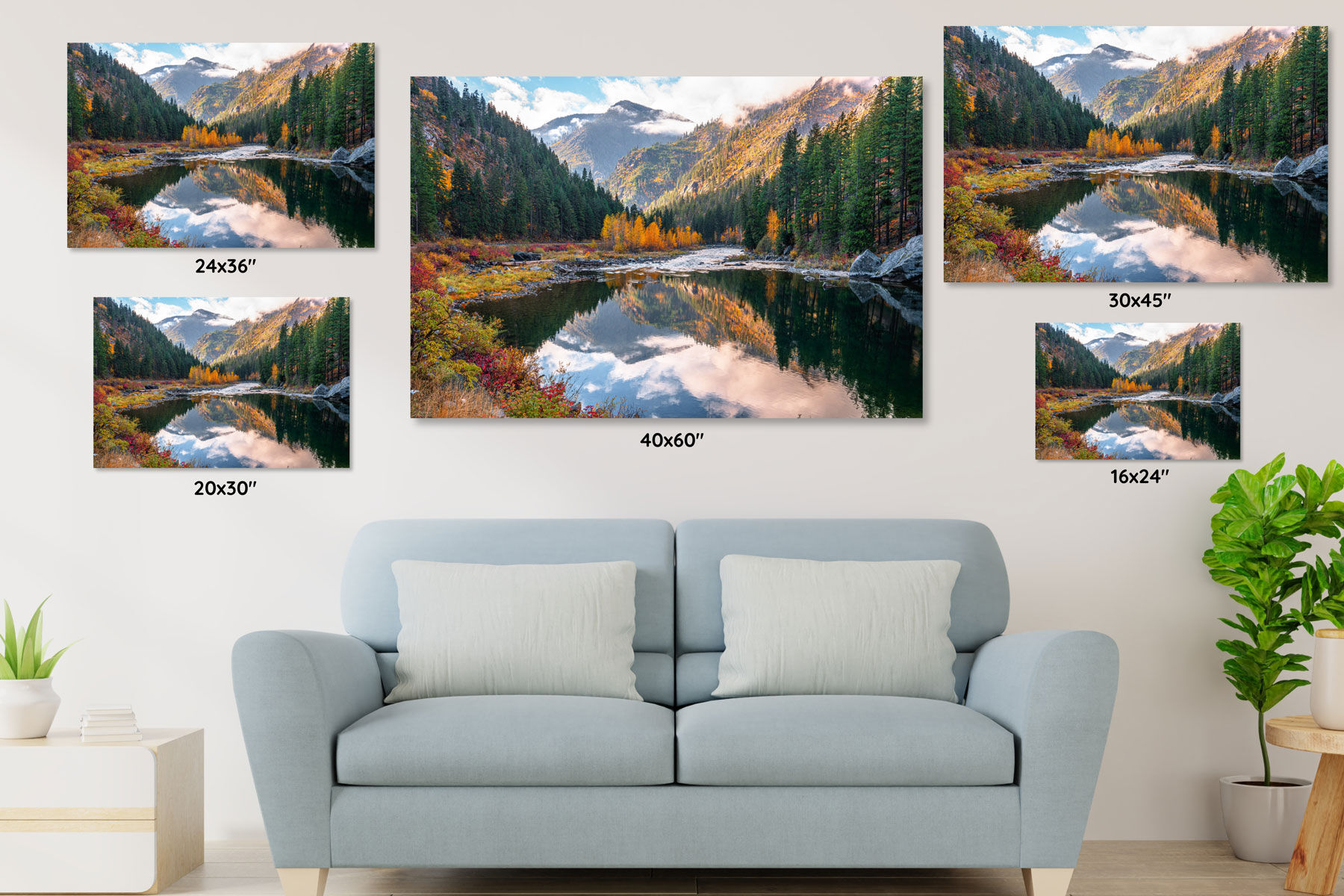
When people choose wall art, most of the attention usually goes to the image itself.
That makes sense. You want to love the photograph. You want it to fit your style, your home, and the feeling you want the room to have.
But size matters more than people sometimes realize.
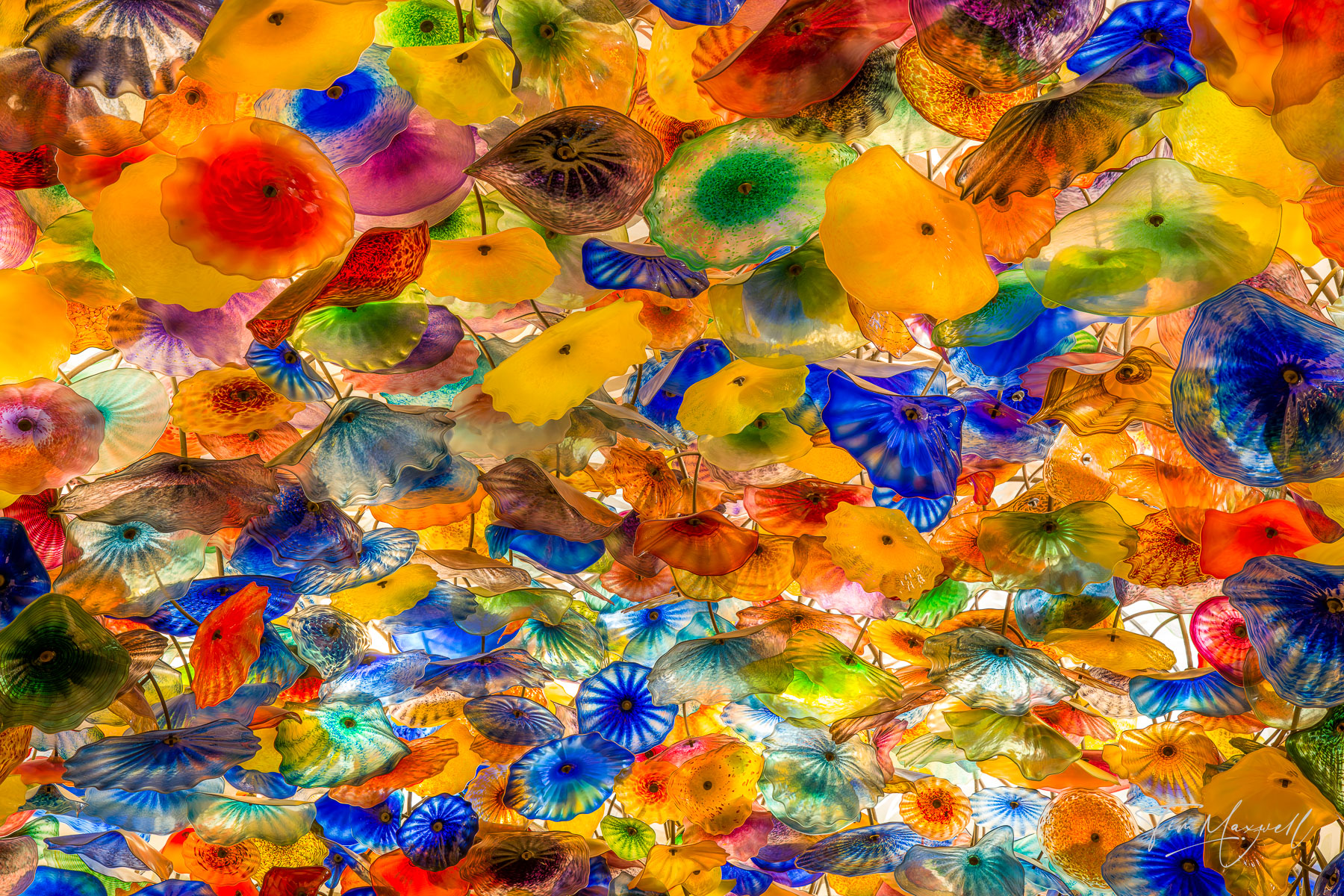
A beautiful piece of art can lose a lot of its impact if it is too small for the space. On the other hand, a large print can completely change how a room feels. It can create a focal point, add a sense of calm, and make the space feel more finished and intentional.
I tend to like symmetry and balance, so this is something I think about a lot. If I have a large empty wall, I usually want to fill it with something large enough to feel meaningful. If I am placing art above a sofa or bed, I want it to feel properly scaled to the furniture instead of floating awkwardly in the middle of the wall.
That doesn't mean every print needs to be huge. Smaller prints absolutely have their place. But for larger walls, beds, sofas, offices, and statement spaces, scale can make a massive difference.
The Most Common Mistake Is Going Too Small
When you are unsure what size to choose, it is completely natural to play it safe.
A smaller print feels less risky. It usually costs less, it feels easier to hang, and it may seem more practical when you are looking at sizes online.
The problem is that wall art often feels smaller once it is actually on the wall.
A 24x36 inch print, for example, is a really nice size. I have ordered several 24x36 prints of my own work, partly because I thought they would be a good size for future art shows. They are large enough to appreciate the detail in the photograph, but still easy enough to handle, display, and (in my case) lug around.
That said, I do not think 24x36 is usually large enough for a main piece over a bed or sofa. It can work beautifully on a smaller wall, in a hallway, in an office, or as part of a grouping, but above a large piece of furniture it can start to feel more like an accent than a centerpiece.
When I ordered a 45x30 inch Lumachrome® TruLife® acrylic print to test the quality and see how one of my images felt at a larger size, the difference was obvious. It was not overwhelmingly large, but it had much more presence. The image felt more immersive, the details were easier to appreciate, and the finished piece felt more like something that could anchor a room.
That is one of the reasons I think large fine art landscape prints can work so well. They give the photograph room to breathe.
Why Landscape Photography Benefits From Larger Sizes
Landscape photography often includes a lot of depth, atmosphere, and small details.
There may be a distant waterfall, a mountain peak, layers of trees, soft light on the horizon, or texture in the clouds. Those elements can still be beautiful in a smaller print, but they often become more noticeable and more powerful when the image is printed larger.
This is especially true for photographs where the main subject is not right up front. If the focal point is farther away, like a waterfall tucked into a canyon or a small cabin beneath a large mountain, a larger print helps bring that detail forward. It gives the viewer more room to step into the scene.
That is part of what I love about large landscape art. It can feel almost like adding a window to the room. Not literally, of course, but emotionally. A large mountain, forest, coastline, or desert scene can give the space a sense of openness and calm that is hard to create with smaller decor.
A Simple Rule for Choosing Wall Art Size
There are no perfect rules, but there are helpful guidelines.
For art above furniture, a good starting point is to choose a piece that is about two-thirds to three-quarters the width of the furniture below it.
So if your sofa is 84 inches wide, you may want art somewhere around 56 to 63 inches wide.
That does not mean the print has to be exactly that size. It just gives you a range that usually feels balanced. If the art is much smaller than that, it can feel disconnected from the furniture. If it is much wider, it may feel crowded unless the wall is large enough to support it.
For open walls without furniture below, the decision is more about the overall wall size and viewing distance. A large blank wall usually needs a larger piece than people expect. A small print in the middle of a big wall can make the room feel unfinished, even if the image itself is beautiful.
Quick Size Guide
Here is a simple way to think about common print sizes in a 3:2 format.
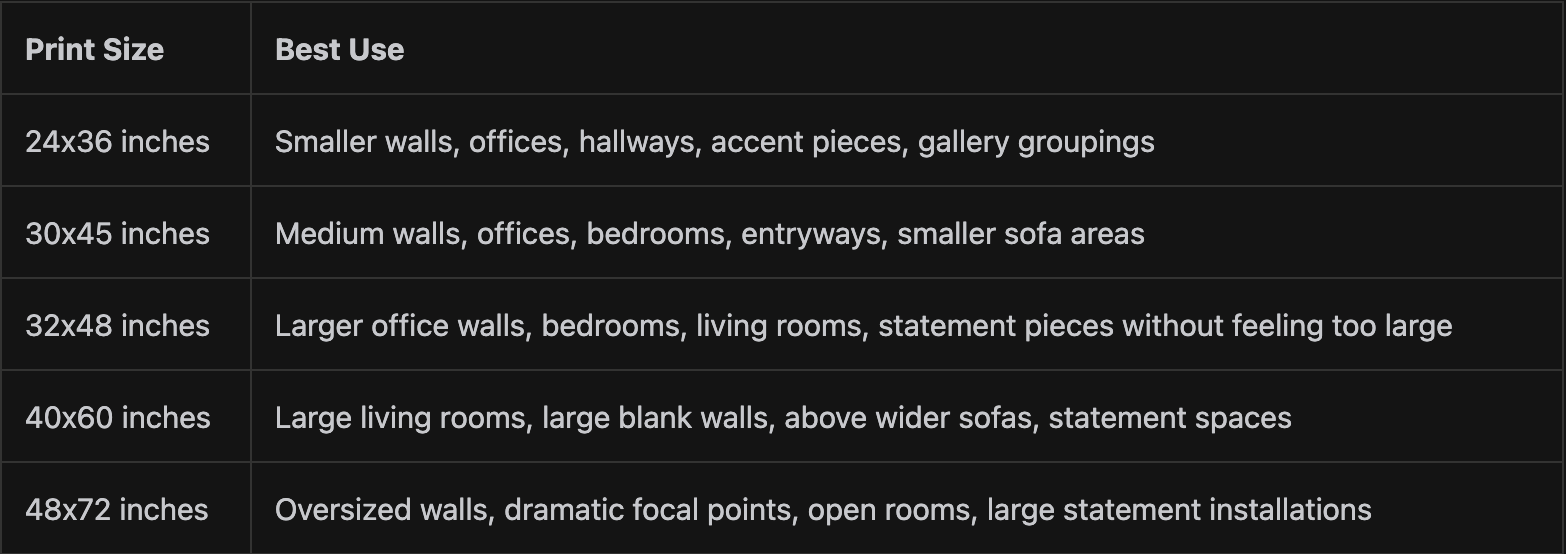
Since my current prints are in a 3:2 format, the width and height both matter. A 60x40 print may be great above a sofa or on a large wall, but it may be too tall above some beds depending on the ceiling height, headboard height, and how much space you have between the furniture and ceiling.
That is why it is helpful to measure the actual wall space before choosing a size.
Above a Sofa
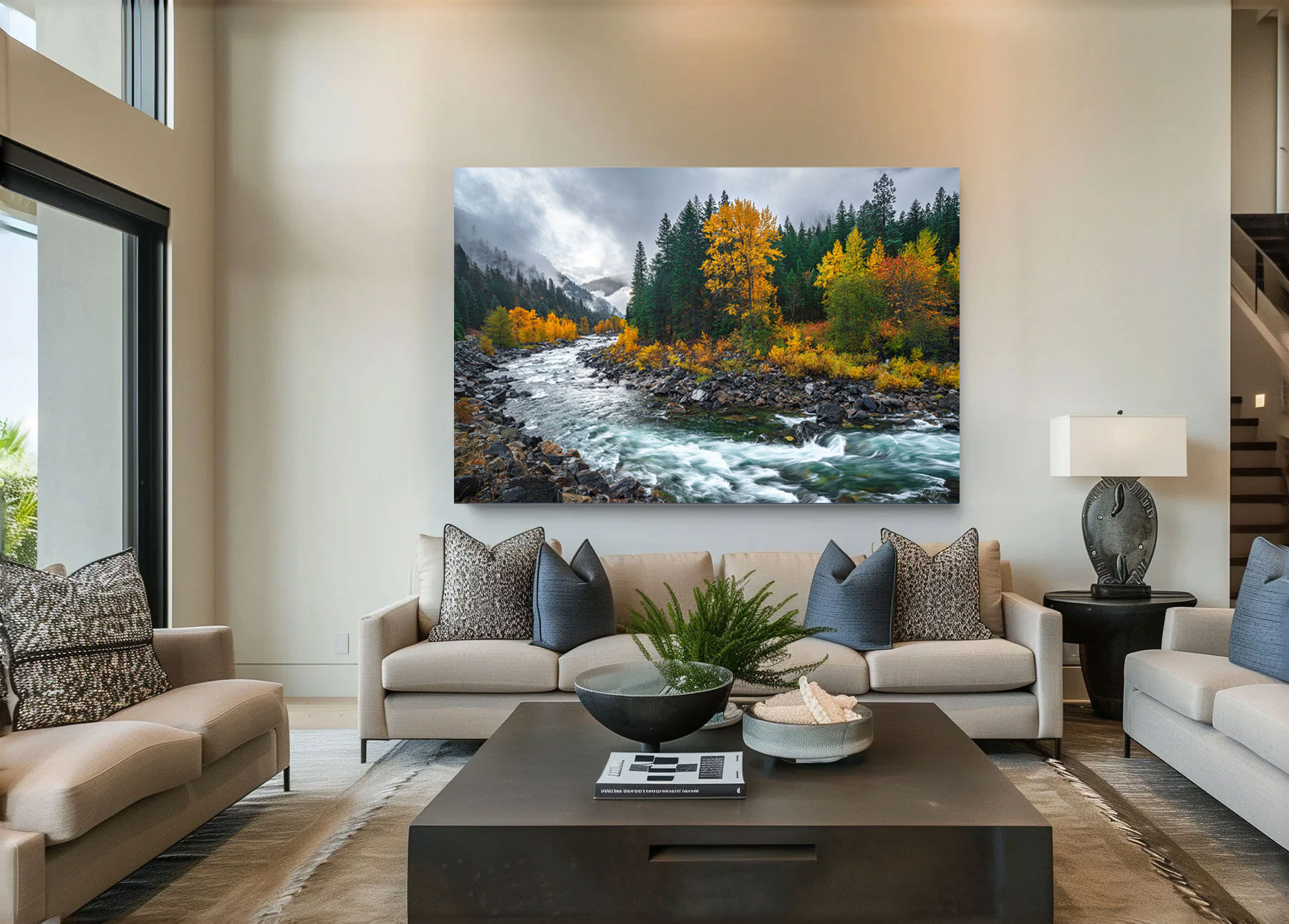
For art above a sofa, I usually prefer a print that feels wide enough to relate to the furniture below it.
A 24x36 print may look nice on its own, but over a standard sofa it can feel too small unless it is paired with other pieces. A 30x45, 32x48, or 40x60 print will usually feel more intentional, depending on the size of the sofa and wall.
For larger sofas, a 40x60 print can make a beautiful centerpiece without needing additional artwork around it. It gives the room a clear focal point and lets the image carry the space.
Above a Bed
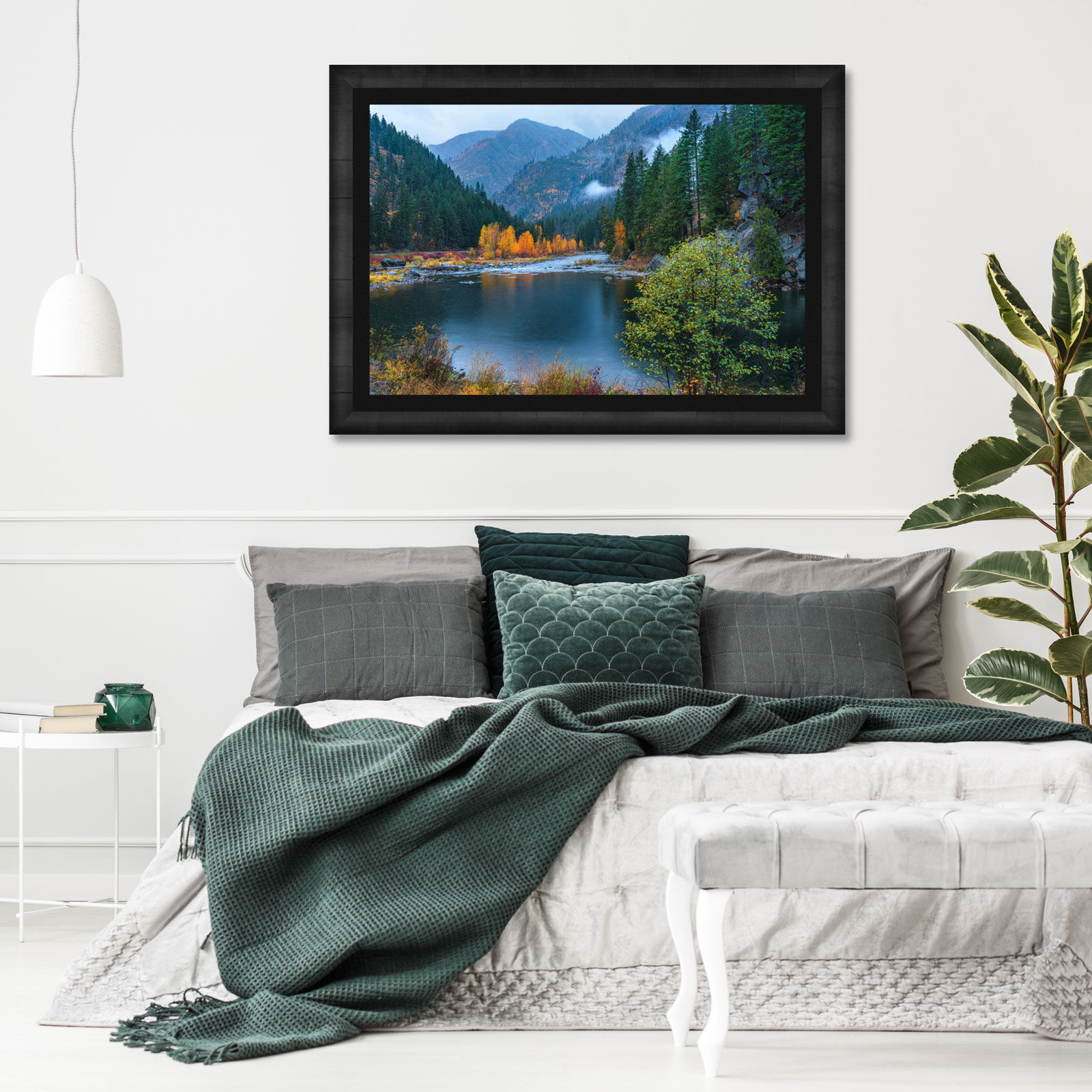
Beds can be a little trickier because height matters more.
A large horizontal print can look beautiful above a bed, but you need enough vertical space between the headboard and ceiling. A 60x40 print may be too tall in some bedrooms, especially if the headboard is high.
For a queen bed, something like 30x45 or 32x48 may work well in many rooms.
For a king bed, you may be able to go wider, possibly 40x60, but it depends on the height of the wall and the style of the bed.
The goal is for the art to feel connected to the bed, not squeezed into the space. When in doubt, it is worth measuring from the top of the headboard to the ceiling and leaving enough breathing room around the print.
In a bedroom, I also tend to prefer calmer images. Soft light, water, forests, mountains, and quieter compositions usually feel better than something overly busy or intense.
Home Offices
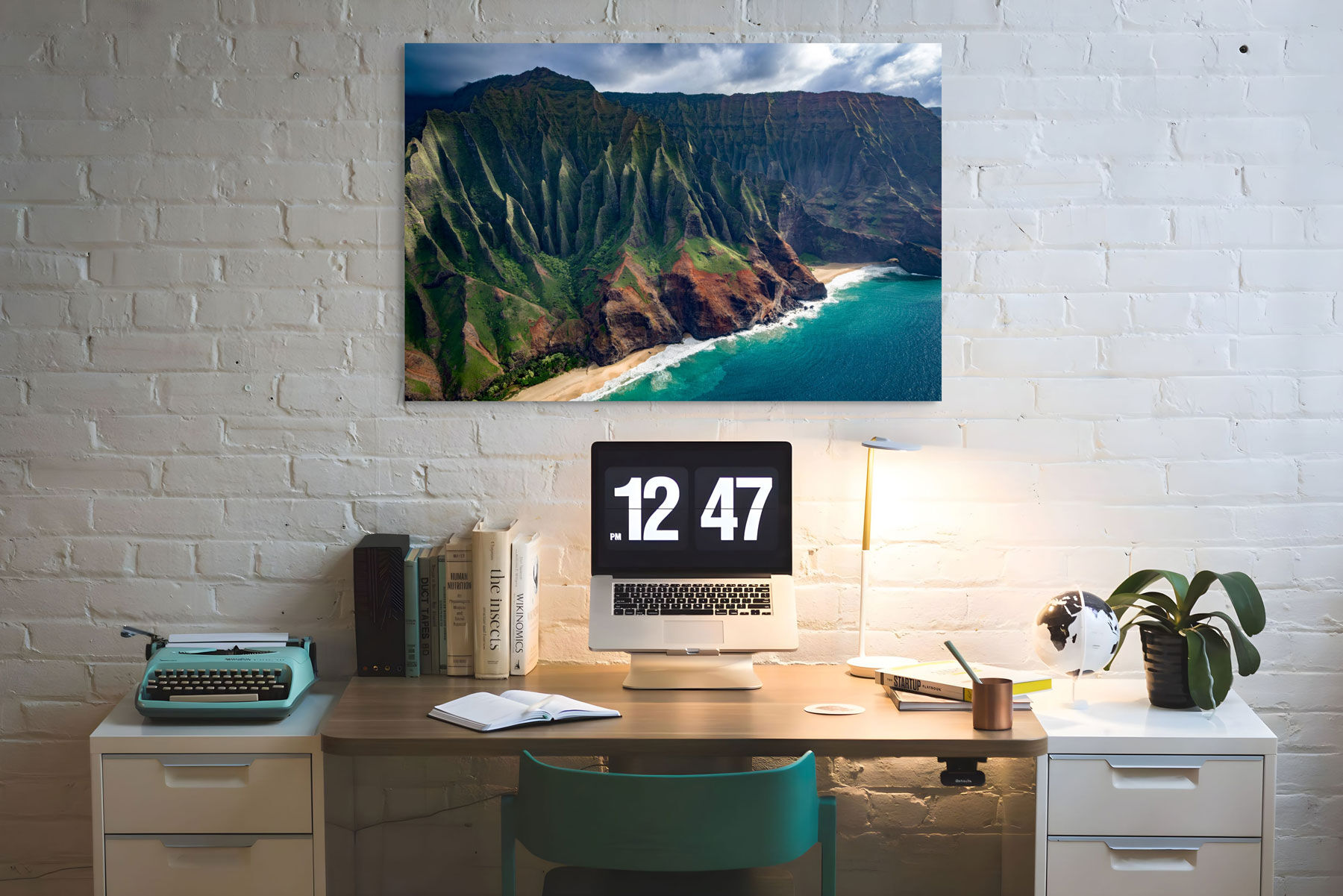
A home office is a great place for landscape art.
A print behind a desk, beside a workspace, or across from where you sit can make the room feel less sterile and more personal. It can also give your eyes somewhere peaceful to land when you need a break from the screen.
For offices, 24x36 can work well on smaller walls. If the wall is larger or visible behind you on video calls, 30x45 or 32x48 can make more of an impact.
I would usually choose something calm but not boring. A landscape with depth, soft color, or a strong sense of atmosphere can make the room feel more focused without being distracting.
Entryways
An entryway is a good place for a statement piece because it sets the tone for the rest of the home.
You do not always need something enormous, but you do want the piece to feel intentional. A 30x45 or 32x48 print can work well in many entryways if the wall has enough room.
If the entryway opens into a larger space, you may be able to go bigger. If it is narrow, you may want to keep the size more modest so the piece does not feel cramped.
Hallways
Hallways are different because the viewing distance is usually tighter.
You may not have enough space to step back and take in a very large print, so 24x36 or 30x45 can often make more sense than an oversized piece.
A hallway can also be a good place for a series of smaller works, especially if the wall is long. But if you are choosing one horizontal landscape print, I would make sure there is enough space around it so it does not feel crowded.
Large Blank Walls
Large blank walls are where bigger prints can really shine.
This is where I think people are most likely to go too small. A single 24x36 print on a large empty wall may look nice up close, but from across the room it can feel a little lost.
For a large wall, a 40x60 or 48x72 print can make the space feel much more complete. One large piece can often look cleaner and more premium than several smaller pieces trying to fill the same area.
This is especially true with landscape photography. A large print can create a sense of depth and openness, almost like the room has another view.
One Large Print or Several Smaller Pieces?
Both can work, but they create different feelings.
Several smaller pieces can create variety and rhythm, especially in a hallway, stairway, or gallery wall.
One large print usually feels calmer and more deliberate. It gives the room a single focal point and lets the image have more emotional impact.
For my own taste, I tend to prefer one large, meaningful piece when the space allows for it. It feels more balanced, less cluttered, and more connected to the room.
Why Mockups Help
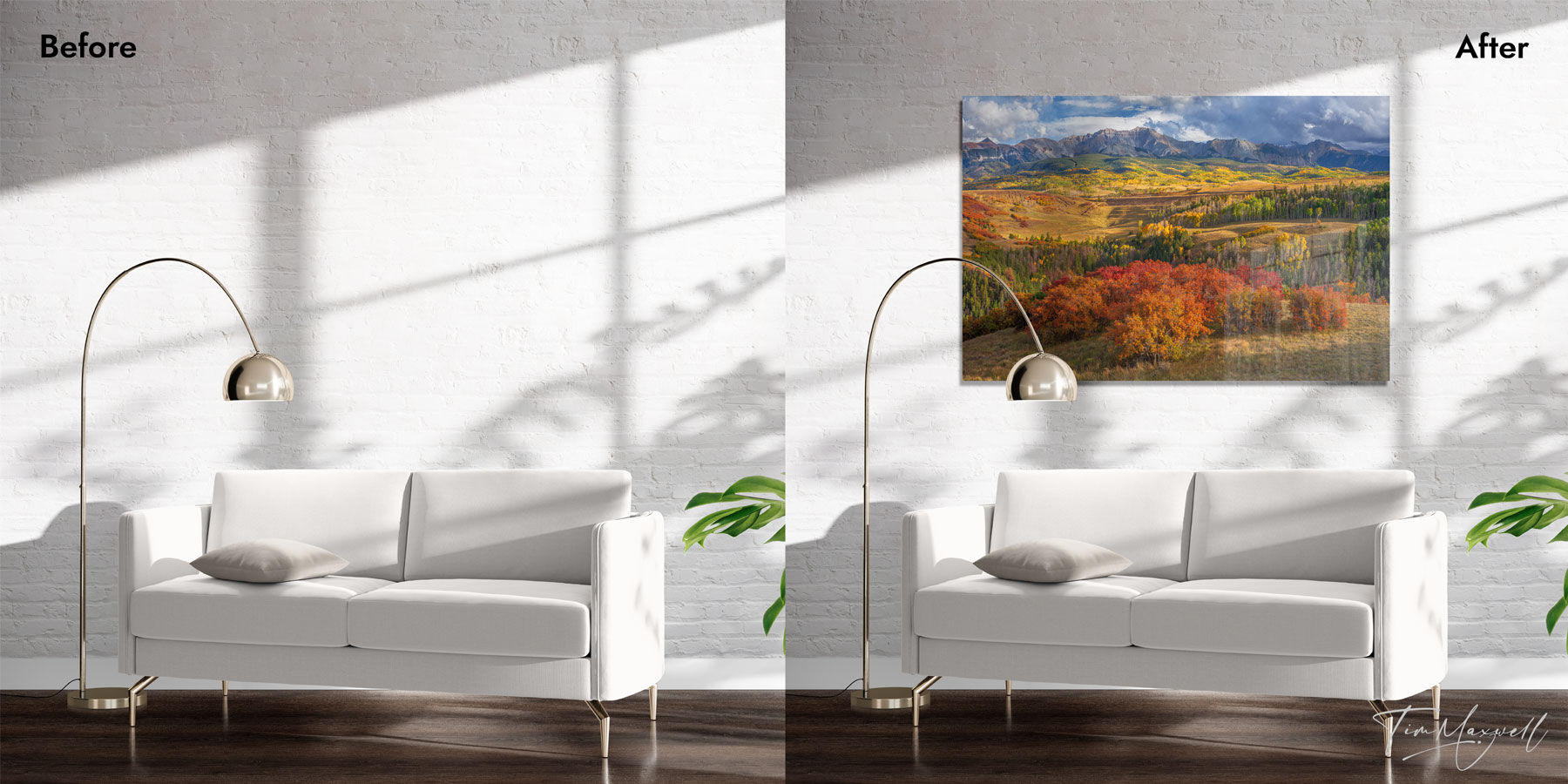
Choosing art online can be difficult because it is hard to picture the true scale from a product page.
A size that sounds large may not feel large once it is above a sofa, bed, or wide piece of furniture. The opposite can happen too. A print may sound intimidating online, but once you see it mocked up in a real room, it may feel just right.
That is why I offer room mockups for customers who are considering a piece and are not sure which size to choose. It is a simple way to see how the artwork might look in your space before ordering.
It does not have to be complicated. Even a quick photo of your wall can help give a better sense of scale, proportion, and placement.
Final Thoughts
The right size can completely change how a piece of art feels.
A smaller print can be perfect for an office, hallway, or accent wall. But if you are choosing artwork for a large blank wall, above a sofa, or over a bed, it is worth considering a larger size than you might first expect.
Large landscape art has a different kind of presence. It gives the image room to breathe, brings out details that might be missed in a smaller print, and can help turn an empty wall into the centerpiece of the room.
My best advice is to measure your space, think about the furniture around it, and choose a size that feels intentional rather than timid.
And if you are considering one of my prints but are unsure which size would work best, I am always happy to help with a room mockup before you order. Just drop me a line!