The Biophilic Design Trend: Why Homes with Nature Art Are Healthier (And More Valuable)
The first time I saw Peter Lik's "Mystic Valley" in a gallery, I couldn't afford it. But I remember standing there, completely absorbed, knowing I wanted that feeling in my home someday. It wasn't about status or decoration. It was about how that image made the space feel quieter, more grounded, more alive.
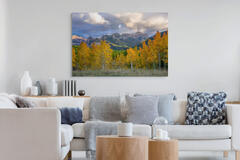
Years later, his Maroon Bells photograph ended up in my office. As someone from Colorado, seeing a place I felt personally connected to, rendered at that scale and with that sense of depth, completely changed how the room felt. It stopped being four walls and became an opening.
I didn't know the term "biophilic design" back then, but I was living it. I've always been drawn to artwork that feels calm, expansive, and rooted in nature. And I've been intentional about choosing pieces for my home and workspace that create that feeling, because I've experienced firsthand how much it matters.
The landscapes I photograph are the places I go to reset mentally. Bringing those scenes indoors has a real, tangible impact on how a space feels day to day. And as it turns out, there's a growing body of research that explains exactly why.

What Is Biophilic Design?
Biophilic design is the practice of connecting people with nature within built environments. The term comes from "biophilia," which literally means "love of life" or "love of living things."
The concept was popularized by biologist E.O. Wilson in the 1980s, who argued that humans have an innate tendency to seek connections with nature and other forms of life. Biophilic design takes that idea and applies it to architecture, interiors, and everyday spaces.
This isn't just about adding a few plants or a nature poster. True biophilic design incorporates natural light, organic materials, natural patterns, views of nature, and yes, thoughtfully chosen landscape photography that brings the emotional and psychological benefits of nature indoors.
According to research published in the journal Building and Environment, biophilic design elements can reduce stress, improve cognitive function, enhance mood and creativity, and even support physical health.
It's not a trend in the fleeting sense. It's a return to something humans have always needed.

The Health Benefits of Biophilic Design
Let's talk about what the research actually shows.
Stress Reduction and Mental Health
One of the most well-documented benefits of biophilic design is its ability to reduce stress. A study from Chalmers University of Technology found that office workers with views of nature or nature-inspired elements in their workspace reported significantly lower stress levels and higher job satisfaction.
Another review in the International Journal of Environmental Research and Public Health found that exposure to natural elements, including nature imagery, was associated with lower cortisol levels, reduced anxiety, and improved overall mental well-being.
For homes, this translates directly. A living room with calming coastal prints, natural light, and organic textures creates an environment where your nervous system can actually relax.
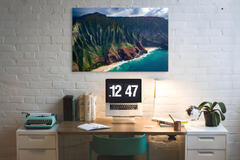
Insert image: “Framed by Tide” (Kauai) – Gentle water, soft light, and organic patterns for relaxation and well-being.
Improved Focus and Productivity
Biophilic design doesn't just help you relax. It also helps you focus.
Research from the University of Exeter found that employees working in environments with natural elements were 15% more productive than those in sparse, minimalist offices. The presence of plants, natural light, and nature imagery all contributed to better concentration and cognitive performance.
In a home office, a large landscape print depicting open vistas or layered mountain scenes can provide the same kind of mental restoration that a walk outside would, helping you stay focused and creative throughout the day.

Physical Health and Well-Being
It might sound surprising, but biophilic design has been linked to measurable improvements in physical health.
A study published in the Journal of Physiological Anthropology found that viewing natural scenes, even through images, led to lower blood pressure, reduced muscle tension, and improved heart rate variability compared to urban scenes.
Research from Harvard's T.H. Chan School of Public Health has also shown that people living in environments with more natural elements report better overall health, fewer sick days, and faster recovery from illness.
While a print on your wall isn't a replacement for time outdoors, it does contribute to an environment that supports your body's natural ability to heal and regulate itself.

Authentic Nature Photography vs. Generic "Nature-Inspired" Décor
Here's where I want to draw an important distinction.
Not all "nature art" is created equal, and the difference matters when your goal is wellness rather than just filling wall space.
Walk into any big box store and you'll find mass-produced prints of generic tropical leaves, abstract "nature-inspired" patterns, or heavily filtered stock photos. These might look fine in a photo, but they often lack the depth, story, and emotional resonance that authentic nature photography carries.
Authentic landscape photography is created through real experiences in nature. It's shot on location, often after hours of waiting for the right light, in places that hold genuine meaning. That intention comes through in the final image.
When you look at a photograph of a place that actually exists, captured by someone who was actually there, your brain processes it differently than a generic design element. There's a sense of presence, a story, a connection to a real moment in time.
This isn't about price or exclusivity. It's about impact. A thoughtfully composed image of misty mountains in Washington, reflections in a Colorado lake, or soft light on a Hawaiian coast carries an emotional weight that mass-produced décor simply doesn't.
If the goal is to create a space that genuinely supports your well-being, the authenticity of the art matters.

Why Biophilic Homes Are More Valuable
While health and wellness are the primary reasons to embrace biophilic design, there's a secondary benefit worth mentioning: homes designed with these principles tend to be more desirable and hold their value better over time.
Research from the Urban Land Institute found that properties with biophilic design features, including natural light, views of nature, and nature-inspired interiors, command higher sale prices and attract buyers more quickly.
This makes sense. People want to live in spaces that feel good. A home filled with natural light, organic materials, and thoughtfully chosen landscape art doesn't just look better in listing photos. It feels better when you walk through the door.
Interior designers and real estate professionals are increasingly recognizing this. Homes that prioritize wellness, connection to nature, and intentional design are seen as long-term investments in quality of life, not just square footage.
But again, this isn't about positioning art as a financial strategy. It's about creating spaces that support how you want to live, and recognizing that those same choices often increase the perceived and actual value of your home.
How to Bring Biophilic Design Into Your Home
If you're ready to incorporate biophilic principles into your space, here are some practical ways to start:
1. Prioritize Natural Light
Natural light is the foundation of biophilic design. If you can, arrange furniture to take advantage of windows, use light curtains instead of heavy drapes, and keep window areas uncluttered.
If natural light is limited, choose artwork that evokes natural light. Prints with soft dawn or dusk tones, reflections on water, or open skies can create a sense of brightness and openness even in darker rooms.
Insert image: “Dawn’s Quiet” (Hawaii or Washington) – Gentle morning light, subtle color transitions, and open space to evoke brightness.
2. Choose Art with Natural Patterns and Organic Flow
Our brains are wired to find comfort in natural patterns: water, layered mountains, fog, repeating organic forms. These elements create a sense of rhythm and harmony that feels instinctively calming.
Look for landscape photography that emphasizes depth, natural light, and a feeling of quiet immersion. Pieces that feel restorative rather than purely decorative are the ones that will have the most impact over time.
Insert image: “Forest Veil” (Washington) – Mist, layered trees, and organic forms, perfect for illustrating natural patterns and restorative qualities.
3. Use Scale Intentionally
In biophilic design, scale matters. A large print can create the feeling of a window or an opening, making a room feel more expansive and connected to the outdoors.
If you're not sure how a piece will look in your space, I'm always happy to create a room mockup for you. Seeing the art on your wall, even digitally, can help you understand how it will change the feeling of the room.
For more guidance on this, check out my post on how to decorate a modern home with landscape photography.

4. Incorporate Water and Reflection Imagery
Water is one of the most powerful biophilic elements. It's calming, rhythmic, and universally associated with life and renewal.
Prints featuring coastal scenes, still lakes, or reflections can bring that same sense of calm into your home. These images work especially well in bedrooms, bathrooms, and living spaces where you want to encourage relaxation.
If you're interested in how art affects sleep specifically, I wrote a detailed post on why landscape art helps you sleep better.
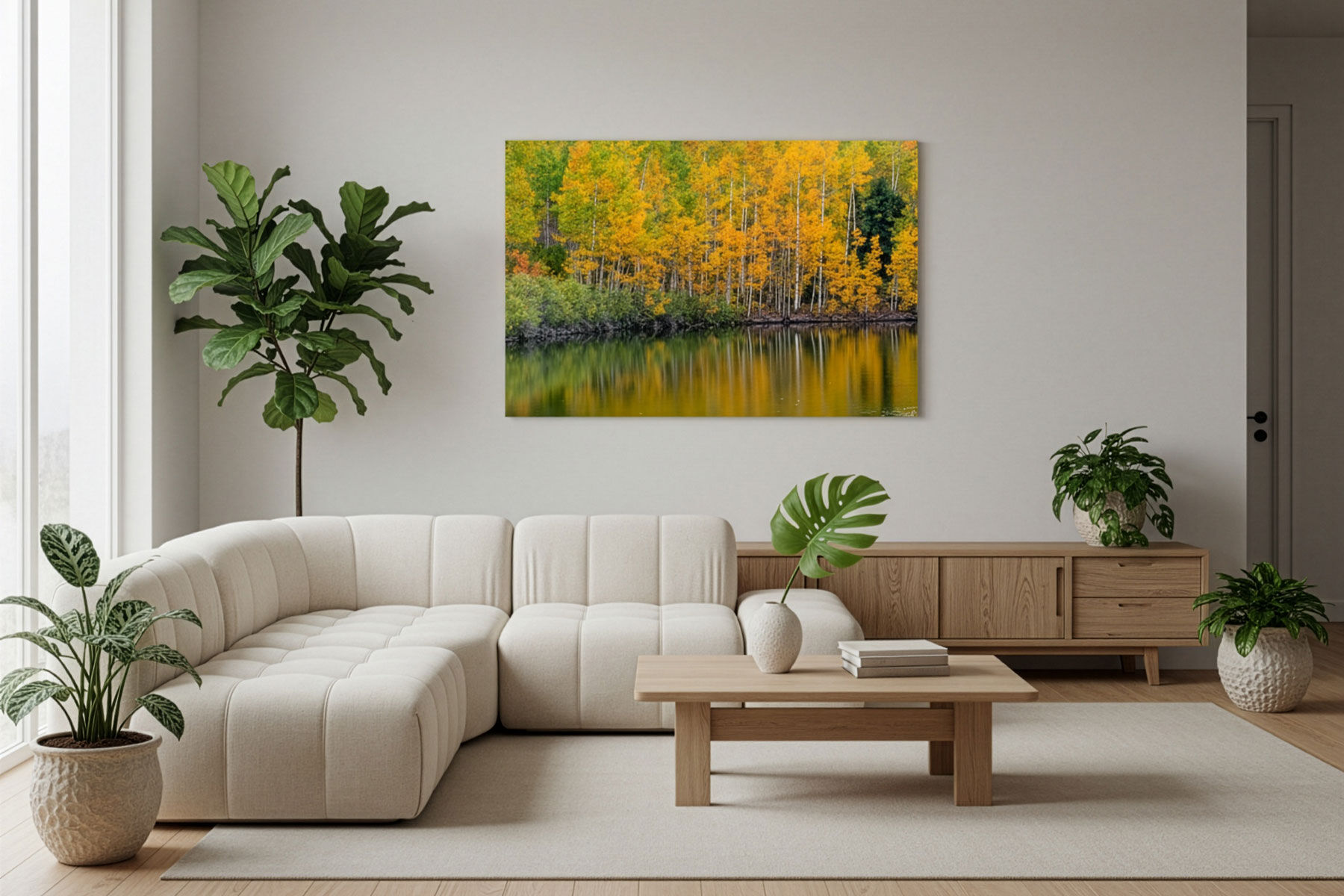
Insert image: “Calm Waters” (Colorado or Hawaii) – Still lake or gentle shoreline, perfect for bedrooms or spaces designed for relaxation.
5. Choose Materials That Reflect Nature
Print quality and materials matter in biophilic design. Lumachrome® TruLife® acrylic and ChromaLuxe® HD metal both offer incredible depth and clarity, creating a sense of presence that mirrors looking through a window.
For a warmer, more organic feel, framed acrylic prints with handcrafted Italian wood from ROMA Moulding add natural texture and elegance without feeling too formal.
And don't forget about lighting. Properly lit artwork enhances the biophilic effect. I cover this in depth in my guide on properly lighting artwork.
For Interior Designers: Using Landscape Photography as a Biophilic Design Tool
If you're an interior designer working with clients who want healthier, more intentional spaces, landscape photography is one of the most flexible and impactful biophilic tools you have.
Here's why it works:
It Anchors a Room
A thoughtfully chosen landscape print can serve as the visual and emotional anchor of a space. It sets the tone, establishes a color palette, and creates a sense of place that other design elements can build around.
It Supports Wellness Goals
More clients are asking for spaces that support mental health, focus, and relaxation. Authentic nature photography delivers on those goals in a way that generic art or purely decorative elements often can't.
It's Scalable and Adaptable
Landscape photography works in every room and at every scale. A large statement piece in a living room, a calming coastal scene in a bedroom, a reflection shot in a home office. The flexibility makes it easy to integrate into any design narrative.
It Tells a Story
Clients connect with spaces that feel personal and meaningful. When you can say, "This image was captured at dawn in the San Juan Mountains of Colorado," or "This is a real lighthouse on the coast of Maine," it adds depth and authenticity that clients remember and value.
Material and Presentation Options
From frameless acrylic and metal to elegantly framed pieces, landscape photography offers a range of presentation styles that can match any aesthetic, from modern minimalist to warm and organic.
If you're working on a project and want to explore options, custom sizing is available, and I'm always happy to provide room mockups to help you and your clients visualize how a piece will work in the space.
Insert image: “Beacon of Maine” (Coastal) – Lighthouse print in a modern living room, showing how a single piece can anchor and elevate a professionally designed space.
Bringing It All Together
Biophilic design isn't about following a checklist. It's about creating spaces that feel alive, connected, and restorative.
The research is clear: surrounding yourself with natural light, organic materials, and authentic nature imagery reduces stress, improves focus, supports physical health, and makes spaces more enjoyable to live and work in.
And while the health and wellness benefits are the heart of it, there's also the reality that homes designed with these principles tend to be more desirable and hold their value better over time.
If you've been thinking about how to make your home feel more intentional, more calming, or more connected to the places you love, start by asking yourself: "What do I want to feel when I walk into this room?"
From there, you might:
- Browse the Colorado gallery for layered mountain scenes and reflections
- Explore the Coastal gallery for water, lighthouses, and soft natural light
- Check out the Hawaii gallery for calming coastal scenes and organic flow
- Read more about the difference between fine art photography and everyday wall decor
Wherever you start, the goal is simple: create a space that supports how you want to live, feel, and thrive.
And if I can help with that process in any way, feel free to reach out. I'd be happy to talk through options, send over a mockup, or answer questions.
Live well.